

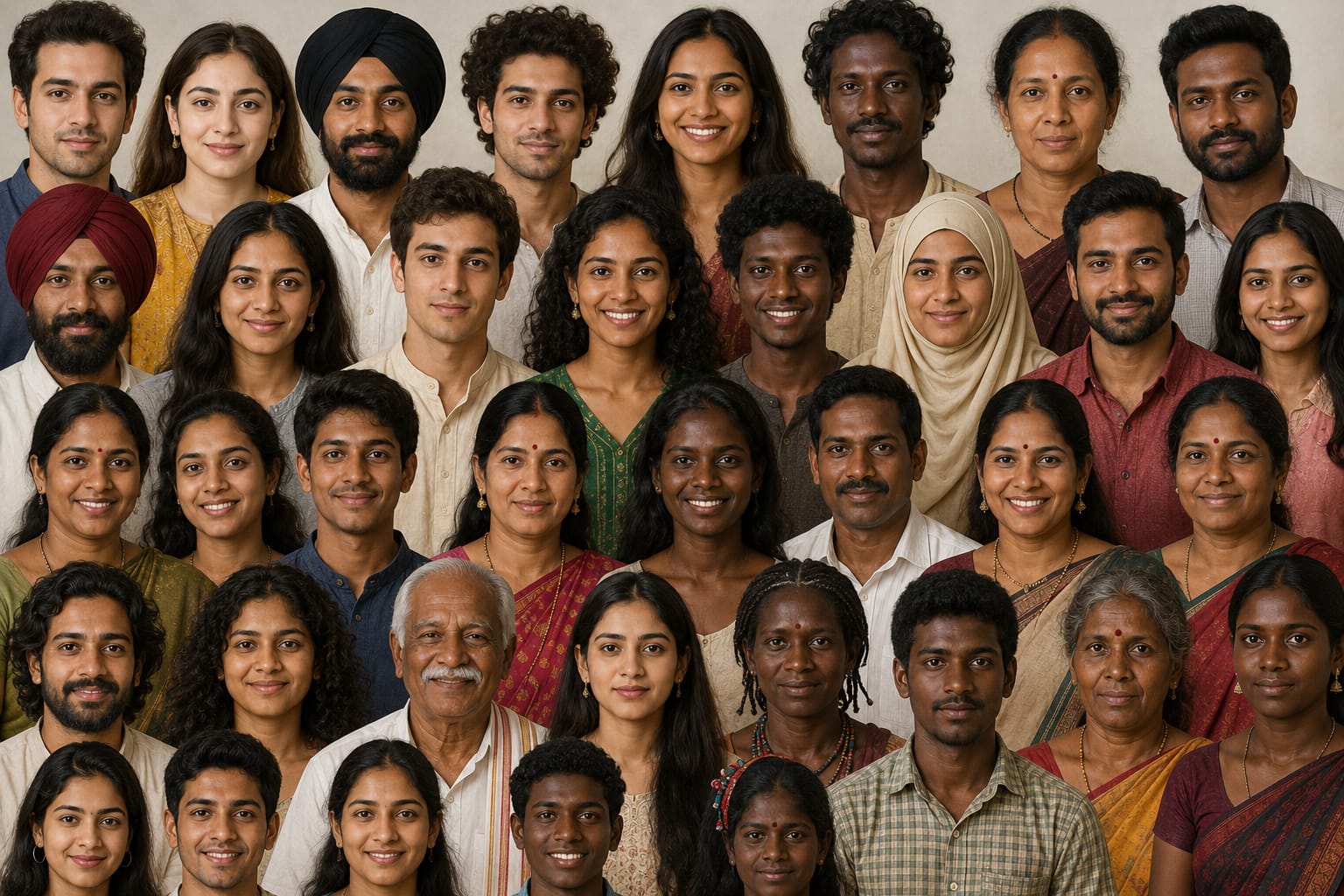
1. India’s Extraordinary Range of Skin Tones
Indian skin color spans nearly the entire human spectrum, from very fair complexions to deep brown shades, with countless variations in between. This diversity reflects India’s status as one of the world’s most genetically and culturally diverse regions. Skin tone varies not only between regions but also within communities and even families. Understanding this variation requires examining genetics, geography, migration, and social history together. No single factor can explain the remarkable range of Indian skin colors seen today.
2. Ancient Ancestry and Genetic Diversity
Most Indians descend from varying mixtures of two ancient ancestral populations known as Ancestral North Indians (ANI) and Ancestral South Indians (ASI). ANI ancestry is linked to populations from Central Asia, Iran, and the Eurasian steppes, while ASI ancestry traces back to indigenous South Asian hunter-gatherers. Since most communities remained endogamous for centuries, different ancestry proportions became concentrated in specific groups. This genetic mixing plays a major role in the wide variation of skin tones found across India.
3. The Influence of Geography and Sunlight
Geography also shapes skin pigmentation. Human populations living in regions with stronger ultraviolet (UV) radiation generally develop darker skin because melanin provides protection against sun damage. India’s large north-to-south span creates differences in UV exposure. As a result, darker pigmentation is often more common closer to the equator. However, migration and centuries of population movement have blurred this pattern. While broad regional trends exist, countless exceptions make simple north-south explanations inadequate.
4. Pigmentation Genes and Their Role
Several genes influence skin color in South Asian populations. One of the most studied is SLC24A5, a gene variant associated with lighter pigmentation that is common in both Europe and parts of South Asia. Other genes, including SLC45A2 and MFSD12, also contribute to skin tone variation. These genes interact in complex ways, creating a broad spectrum of pigmentation rather than distinct categories. The result is a unique genetic mosaic that differs from both European and East Asian pigmentation patterns.
5. Regional Differences and Individual Variation
Regional patterns can be observed, but they are far from absolute. Kashmiris and many Punjabis are often lighter-skinned on average, while many South Indian and Adivasi communities tend toward darker complexions. Yet every region contains significant diversity. Individuals within the same community—or even within the same family—can have noticeably different skin tones. This variation highlights the complex inheritance of pigmentation genes and shows why stereotypes about regional appearance often fail to reflect reality.
6. Colorism and Social Perceptions
Skin tone in India has long carried social significance. Historical associations between lighter skin, social status, caste, and colonial influence contributed to the development of colorism. These attitudes have influenced beauty standards, matrimonial preferences, advertising, and entertainment industries. The popularity of skin-lightening products reflects these longstanding biases. However, growing public awareness has challenged such perceptions, leading to more open discussions about representation, beauty standards, and the harmful effects of color-based discrimination.
7. Indian Skin Tones Beyond India
The diversity of Indian skin tones extends beyond the country’s borders. Large diaspora communities in regions such as the Caribbean, East Africa, South Africa, Fiji, and North America have developed their own unique histories of migration and intermixing. These communities further expand the range of appearances associated with Indian heritage. As a result, there is no single physical appearance that defines people of Indian origin worldwide.
8. Conclusion: No Single Shade Represents India
There is no representative skin color for India. The country’s immense diversity results from ancient ancestry, genetic variation, geography, migration, and social history. Together, these factors have produced one of the broadest spectrums of human skin tones found anywhere in the world. Any accurate understanding of Indian skin color must recognize this complexity rather than relying on simplified stereotypes or regional assumptions