


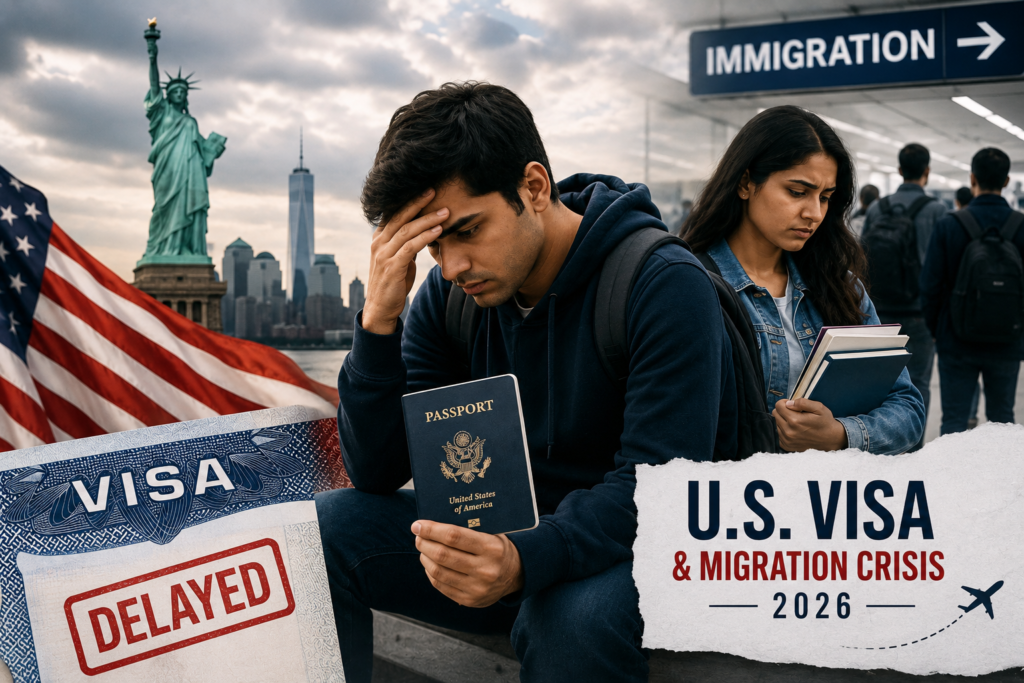
The United States is facing growing concerns over its immigration and visa system in 2026, creating uncertainty for international students, skilled workers, and companies that depend on foreign talent. Recent policy changes and stricter immigration rules have created anxiety among thousands of migrants, especially Indians working or studying in the U.S.
For decades, the United States has been considered one of the world’s leading destinations for education, employment, research, and innovation. However, recent immigration developments are now making many students and professionals reconsider their future plans.
New Immigration Rules Raise Concerns
One of the biggest concerns is a recent policy update by the U.S. Citizenship and Immigration Services (USCIS), which could require many Green Card applicants to return to their home countries instead of completing the process while staying in America. Immigration experts warn that this may disrupt careers, separate families, and increase legal and travel expenses for applicants already living in the U.S. legally.
The situation has become especially stressful for H-1B visa holders working in sectors such as technology, healthcare, engineering, and biotechnology. Many workers already face long Green Card waiting periods, while recent layoffs in major tech companies have added more pressure. Under current visa rules, laid-off workers have limited time to find another job or leave the country.
Indian applicants already face some of the world’s longest employment-based Green Card backlogs, with many professionals waiting years for permanent residency. Immigration lawyers have also reported growing confusion around visa renewals, work authorization rules, and travel restrictions. Many migrants worry that even small paperwork mistakes or delays could negatively impact their future immigration status.
Students and Skilled Workers Feel Uncertain
International students are also worried. Reports suggest that stricter visa checks and uncertainty about future work opportunities are discouraging many students from choosing the U.S. for higher education. Several universities have reportedly seen a slowdown in applications from international students, particularly from Asian countries.
Many students are concerned about the future of Optional Practical Training (OPT) programs and job opportunities after graduation. For students investing large amounts of money into overseas education, uncertainty surrounding employment opportunities and long-term settlement has become a major concern.
At the same time, some officials have attempted to calm fears by clarifying that certain H-1B visa holders may still be able to continue their Green Card process without leaving the United States. However, confusion surrounding the new policies remains high.
Impact on America’s Global Image
Experts believe these immigration changes could affect America’s reputation as a global destination for skilled talent, innovation, research, and higher education in the coming years. Industries such as biotechnology, healthcare, artificial intelligence, and engineering heavily rely on international talent, and stricter immigration policies could encourage skilled professionals to explore opportunities in countries like Canada, Australia, and Germany instead.
As debates around immigration continue, many students and skilled workers are closely watching future U.S. policy decisions that could shape their careers and lives for years to come.