

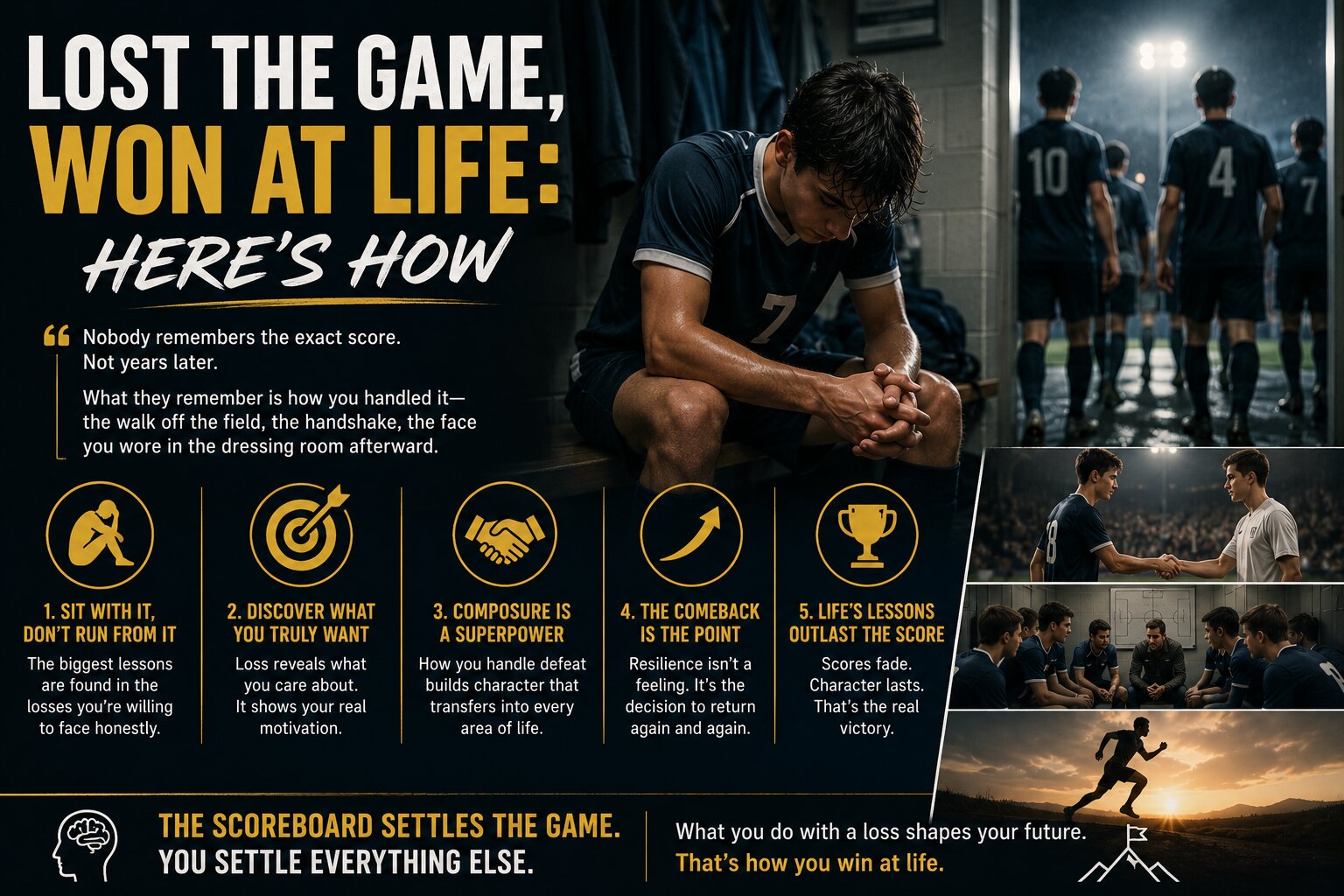
Nobody remembers the exact score. Not years later. What they remember is how you handled it and the walk off the field, the handshake, the face you wore in the dressing room afterward. Losing in sport is not the opposite of success. For the people who pay attention, it is often where the real education begins.
The Loss That Changes You Is the One You Stop Running From
Most people process a bad loss by moving on quickly. New week, next game, forget it happened. That instinct is understandable. It is also wasteful.
The athletes who grow the most from losing are the ones who sit with it long enough to ask the right questions. Not why did we lose but what did this reveal about me that winning never would have? A loss strips away the comfort of a result and leaves only the truth of your preparation, your composure, and your character under pressure. That information is expensive. Most people pay the cost and throw away the receipt.
Losing Teaches You What You Actually Want
Winning feels good regardless of how much it means to you. Losing cuts deep only when something genuine is at stake. That pain is useful data.
The athletes who hurt the most after a loss are usually the ones who care the most and knowing what you genuinely care about, at an age when most people are still performing versions of themselves, is a serious advantage. Sport surfaces real motivation in a way that ordinary life rarely does. Every significant loss either clarifies your hunger or reveals its absence. Both answers are worth having.
Composure After Defeat Is a Skill and It Transfers Everywhere
Shaking hands after a loss you did not see coming. Congratulating an opponent who outplayed you. Walking into the post-match debrief without deflecting blame. None of this comes naturally. Sport drills it in through repetition until it stops feeling like an effort and starts feeling like character.
That composure does not stay on the field. The person who can absorb a loss publicly and respond with dignity carries that exact quality into every professional and personal environment they enter. Employers notice it. Teams trust it. Relationships hold because of it. The locker room is one of the few places in life that actually trains this response under real conditions.
Coming Back Is the Whole Point
The loss itself is not the lesson. The return is. Choosing to come back – to train again, compete again, and put yourself in a position to lose again, is the single most important thing sport teaches. It is not resilience as a concept, it is resilience as a repeated physical act.
Every person who has played long enough carries a loss that once felt unsurvivable. Most of them will tell you it was the making of them.
The scoreboard settles the game. It does not settle anything else. What you do with a loss, how honestly you face it, how deliberately you learn from it, and how quickly you decide to come back is entirely yours to determine. Sport just gives you the conditions to practice that choice, over and over, until it stops being a choice and starts being who you are.