


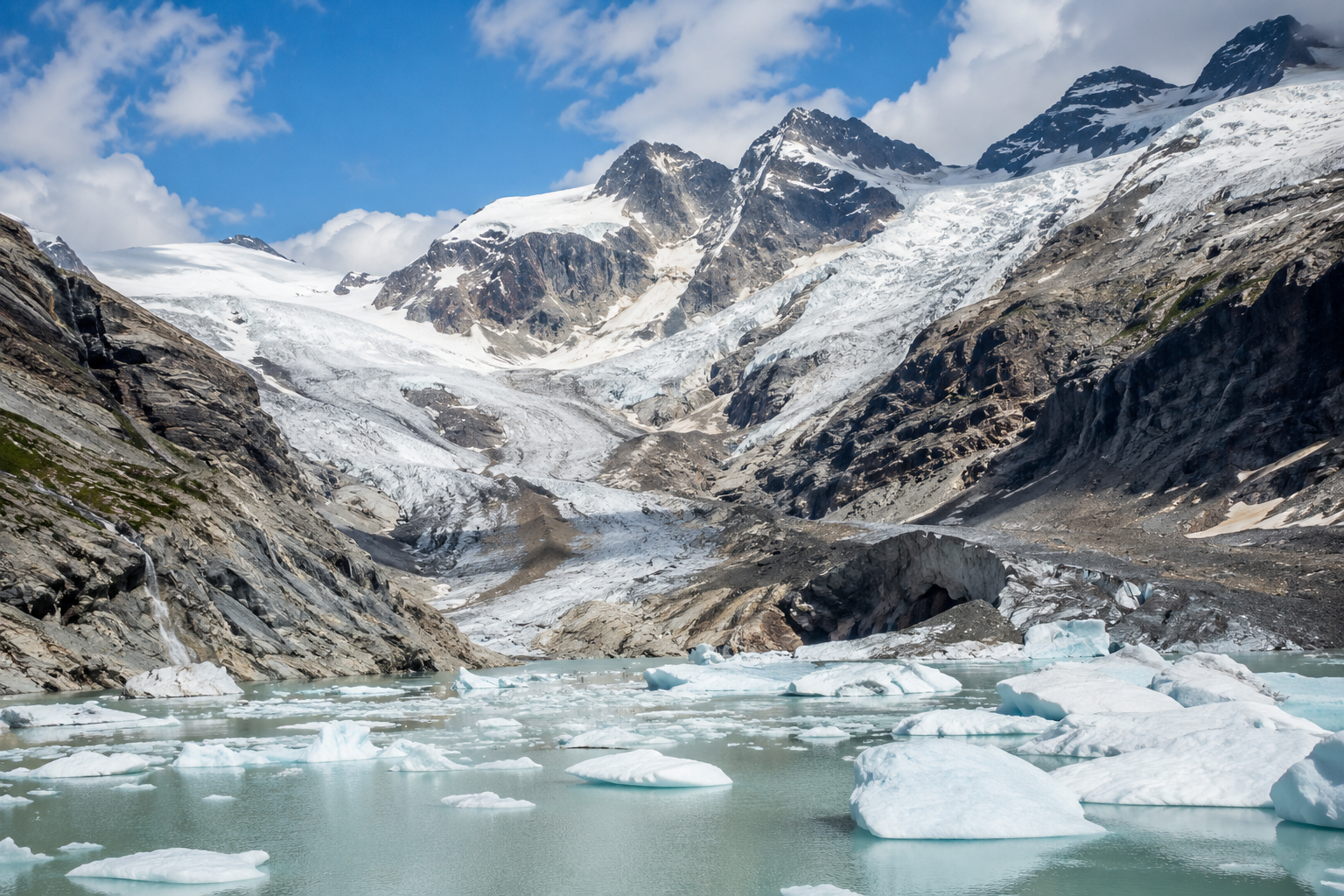
Extreme Heat Pushes Swiss Glaciers Toward Record Ice Loss
Switzerland’s glaciers are on track to lose an enormous amount of ice this year as an intense European heatwave continues to raise temperatures across the Alps. Scientists warn that the country could reach its “Glacier Loss Day” by the end of June, making it the second-earliest occurrence ever recorded. The milestone marks the point when glaciers have already lost all the snow accumulated during winter and begin losing their permanent ice reserves.
Low Snowfall and Sahara Dust Increase the Damage
Experts say several factors have combined to speed up glacier melting this year. First, Switzerland experienced lower-than-normal snowfall during winter, leaving glaciers with less natural protection against rising temperatures. Additionally, dust carried from the Sahara Desert settled on glacier surfaces, making the ice darker. As a result, the glaciers absorbed more sunlight instead of reflecting it, which significantly accelerated melting. Furthermore, the ongoing heatwave has continued to intensify the process across the region.
Climate Change Continues to Reshape the Alps
Scientists believe climate change remains the primary driver behind the rapid loss of glacier ice across Europe. Over the past decade, Switzerland has already lost a significant portion of its glacier volume, while many smaller glaciers have disappeared completely. Moreover, researchers warn that continued warming could permanently transform Alpine landscapes, affect freshwater supplies, and increase the risk of landslides and flooding in mountain regions.
Experts Call for Faster Climate Action
Researchers stress that reducing greenhouse gas emissions remains essential to slowing glacier retreat. Although scientists continue to monitor glacier conditions closely, they caution that without stronger climate action, future ice losses could become even more severe. Meanwhile, Switzerland’s glaciers have become one of the clearest indicators of the growing impact of global warming on Europe’s natural environment.