

Introduction
One of the most intriguing locations in the universe is space. A lot of people have always dreamed of becoming astronauts and travelling beyond earth. But what is life like in space? Life in space is very different to life on Earth. In the lack of gravity, minimal space, and numerous challenges, it is essential for astronauts to adjust to this special environment.
There’s lots of work, exercise, experiments and planning to be done in a day in space. Each minute counts because in space safety and discipline is paramount.
Waking Up in Space
Space sleepers don’t sleep on earth beds. Rather, they sleep in a sleeping bag that is attached to the walls within the spacecraft or space station. There is no gravity, so they don’t require a mattress. They rest on their backs.
Generally, most astronauts get up at a regular hour, typically around 6:00 or 7:00 in the morning. But they start their day by consulting their schedule that is determined from mission control on earth. All tasks are well planned to ensure smooth operations.
The International Space Station (ISS) orbits Earth every 90 minutes, making it possible for astronauts to witness multiple sunrises and sunsets throughout the day . The ISS orbits Earth once every 90 minutes, allowing astronauts to witness multiple sunrises and sunsets during the day. This means they can see nearly 16 sunsets and sunrises in 24 hours.
Morning Routine
Brushing teeth, washing the face are very different things in space. Zero gravity causes water to not flow normally. Rather, it develops floating bubbles. They wash using a small quantity of water and special wipes.
It can be more difficult to use the toilet in space. Waste cannot be gravity-fed and is collected in special vacuums.
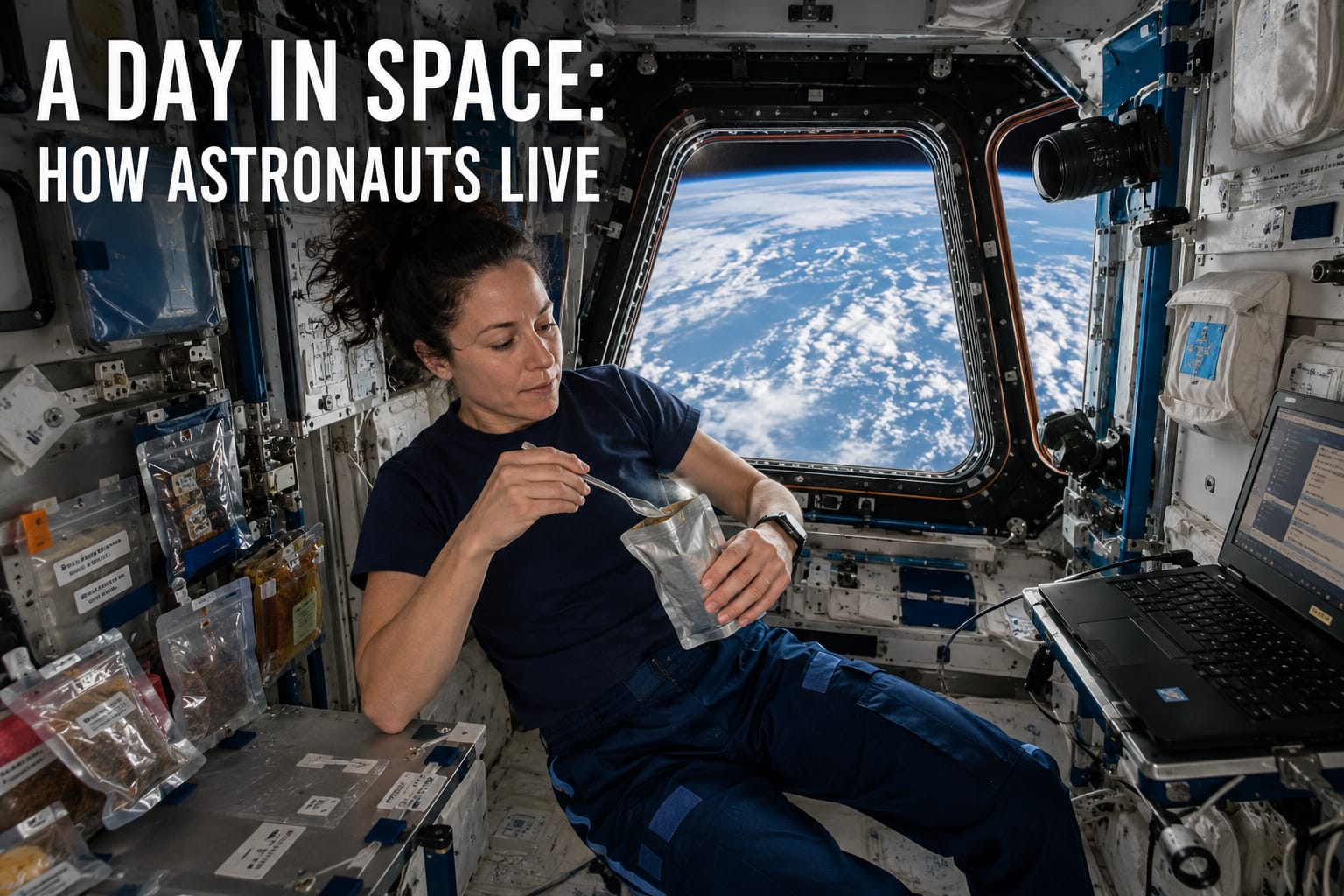
The astronauts prepare for and have breakfast. Their food comes in sealed packets or containers. They can consume products such as cereal, fruits, eggs or tortillas. Bread is typically not eaten due to crumbs floating around and causing damage to the equipment.
Working in Space
An astronaut spends a major portion of his/her day at work. The primary use of the ISS is to conduct scientific experiments. The experiments assist the scientists in understanding the effect of space on the human body, plants, and materials.
Astronauts learn about the loss of muscle, weak bones, and the impact of long-term space travel for instance. They also provide testing of new technologies that could be used in future missions to the Moon and Mars.
Besides experiments, astronauts have to maintain the space station. They maintain equipment, inspect systems and ensure that everything is in good working order. At times they even conduct spacewalks to repair materials outside the station.
Spacewalking is a thrilling but dangerous aspect of an astronaut’s career. Special suits are worn by astronauts that supply oxygen and keep the body warm and protected from radiation.
Exercise is Essential
The human body is affected by the absence of gravity. In a state of weightlessness, muscles become flabby, bones lose strength. Astronauts need to exercise for around 2 hours each day to remain healthy.
Special equipment is available on-board the ISS including treadmills, a bicycle and resistance equipment. Astronauts attach themselves to these machines so that they don’t float away while exercising.
They are given exercise to keep them strong and ready for the return to earth where gravity will be a new reality for them.
The eating of Meals in Space;
Food in space is carefully planned, not to mention fresh . Putting together a meal on the ISS is a well organized affair, and the food is fresh. For longer missions, food is stored to be eaten. Some food items are freeze-dried, some are ready to eat.
Pasta, rice, vegetables, chicken and soups are some of the foods that astronauts eat. They also have snacks such as cookies and nuts. Special bags containing drinking water with straws.
What is interesting is that water is recycled in space. This includes the water from sweat and even the urine which is cleansed and rendered potable. The recycling system works very well because it is costlier to take water from Earth.
Communication with Earth
Video calls, emails and radio communication allow astronauts to communicate with their family and mission control. This will keep them feeling connected and will help with loneliness.
They also disseminate their experiences to the world through photos and videos taken in space. Astronauts take breathtaking photographs of the planets, universe and Earth.
The view of the Earth from space can be described as a beautiful and emotional experience. It is a reminder to the astronauts of the fragility and beauty of our planet.
Free Time in Space
Astronauts need to rest, too. They can read books, watch movies, listen to music or peek out the windows of the station when they have free time.
A space-based view of the Earth is stunning. From space, astronauts can view oceans, mountains, cities and even storms. This is considered by many to be one of the highlights of their journey.
Astronauts also have birthdays and holidays celebrated aboard the space station.
Sleeping Again
Astronauts get ready for bed in the end. To avoid floating around during the night they zip up their sleeping bags.
The station becomes quieter and light is dimmed to provide a normal sleeping environment. The reason why getting a good night’s sleep is crucial is that the following day will be just as hectic.
Conclusion
A day in space is an exciting, challenging and very different experience from what it is on Earth. While floating in bed at night or performing meaningful experiments, astronauts live in a world that demands discipline, teamwork and courage.
They have a schedule of routine activities that will allow scientists to gain new insights into space and advance preparation for their return missions to the Moon, Mars, and beyond. Being in space is not an easy task, but it is a testament to human ingenuity and will to explore the unknown.
With the advancement in technology, it seems like more and more people are now dreaming of spending more time in space. For now, the astronauts continue to inspire us with the reality of life in the universe.