

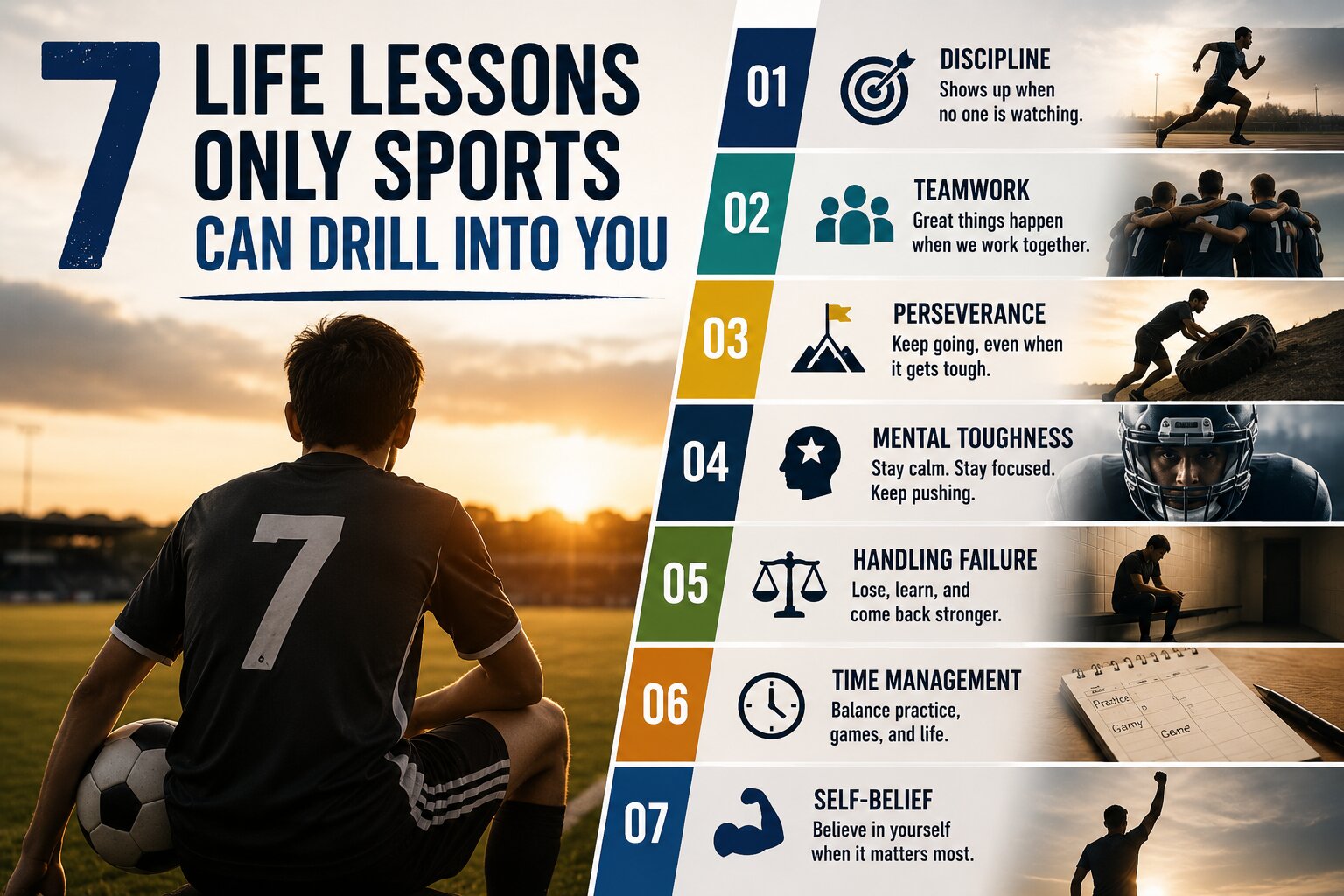
There is a version of education that happens between white lines, in locker rooms, and during the quiet drive home after a loss. It does not issue certificates, but the things it installs tend to outlast almost everything else. If you have read about how sport complements classroom learning, this goes a layer deeper into the specific lessons that sport does not just introduce, but genuinely drills into you through repetition, pressure, and consequence.
Discipline Is an Identity, Not a Habit
Most people treat discipline as something they summon when they need it. Athletes discover early that it works the other way – the ones who last stop treating training as a daily decision and start treating it as a statement about who they are. That shift, from “I should train” to “this is what I do,” removes the negotiation entirely. The most effective athletes do not fight themselves every morning; they settled that argument years ago and simply never reopened it.
Losing in Public Strips Away the Ego Armour Most People Never Lose
Losing a match in front of a crowd, then shaking hands and walking back through the gate, that specific sequence teaches something that comfort cannot. It forces you to separate your identity from the outcome at a point in life when the ego is still forming. Most people spend decades constructing elaborate defences against public failure. Athletes face it repeatedly, early, and learn that their sense of self does not actually depend on the scoreline which is one of the more durable things sport can hand a person.
Accepting Your Role, Especially When It Is Not the One You Wanted
Sport confronts you with the gap between the role you want and the role the team actually needs from you and asks you to close that gap without resentment. The midfielder who tracks back instead of pushing forward. The reserve who trains at full intensity knowing they may not start. Accepting that with genuine commitment rather than quiet bitterness is harder than it sounds, and the athletes who manage it develop a maturity around ego that most people only arrive at much later, if at all.
Pressure Does Not Build Character – It Exposes It
High-pressure moments in sport do not transform a person; they reveal preparation. Athletes who train honestly and prepare with precision tend to find that pressure feels familiar, even manageable because they have rehearsed the emotional conditions as much as the physical ones. What sport teaches is not how to rise to the occasion, but how to make the occasion feel like another Tuesday so that the performance takes care of itself.
Brilliance Gets You Picked – Reliability Gets You Trusted
Sport is ruthless about the difference between a player who performs and a player who performs consistently. Brilliance in patches earns admiration; showing up at the same standard, week after week, in poor conditions, under fatigue, when the stakes feel low, that earns trust. Athletes who internalise this stop chasing peak moments and start investing in the floor of their performance instead, which turns out to be the metric that actually determines a career.
Authority You Earn Looks Different From Authority You Are Given
Every senior player in a dressing room carries a weight that no title assigned to them. They earned the right to speak because the team watched them work, watched them hurt, and watched them return. Sport builds this understanding from the ground up that genuine leadership flows from demonstrated cost, not from appointment. The athletes who absorb this lesson lead differently in every room they enter afterward: they do not claim authority, they accumulate it.
Being Counted On By Others Rebuilds How You Count On Yourself
Sport places you inside a group that carries a live expectation of your best – not occasionally, but every session, every match. Over time, that external standard stops feeling like pressure from outside and starts operating as an internal one. Athletes who grow inside teams that hold each other to account often find that their confidence does not come from self-belief in the abstract, but from the specific memory of delivering when the people around them needed it and that kind of confidence does not erode easily.
These seven lessons do not arrive through instruction. Sport drills them in through experience, setback, and years of repetition, which is precisely why they stay. Alongside everything formal education builds in the mind, they shape something underneath it: the architecture of how a person actually functions when things get hard.