

INTRODUCTION
1. Fashion’s Massive Environmental Footprint
Fashion is one of the world’s most resource-intensive industries. The global clothing and textile sector is worth over $1.3 trillion and employs more than 300 million people worldwide. While fashion drives economic growth, its environmental impact is enormous. From greenhouse gas emissions to water consumption and waste generation, the industry’s effects extend far beyond factories and retail stores. The scale of production means even small inefficiencies can create significant environmental damage. As demand for cheap, rapidly changing clothing grows, the industry’s ecological footprint continues to expand, making sustainability one of the most urgent challenges facing modern fashion.
2. Carbon Emissions and Fossil Fuel Dependence
Fashion contributes significantly to global greenhouse gas emissions, with recent estimates placing its share between 2% and 8% of worldwide emissions. Industry reports show apparel emissions increased by 7.5% in 2023, reaching nearly 944 million tonnes. A major factor is the growing use of virgin polyester, which accounts for about 57% of global fiber production. Since polyester is derived from petroleum, its production strengthens the connection between fashion and fossil fuel extraction. Fast-fashion brands often prioritize low-cost synthetic materials, increasing emissions while encouraging overproduction. Without major reductions in production volumes, the industry’s climate impact is likely to continue rising.
3. Water Consumption and Resource Depletion
The fashion industry consumes an estimated 79 trillion liters of water annually, making it one of the largest industrial users of freshwater. Cotton cultivation is particularly water-intensive, requiring vast quantities of irrigation. One of the most dramatic examples is the Aral Sea disaster, where river diversions for cotton farming caused one of the world’s largest lakes to shrink dramatically. Today, cotton production continues to place heavy pressure on water resources across many regions. As global clothing demand increases, competition for freshwater grows, creating challenges for agriculture, ecosystems, and local communities that depend on the same water sources.
4. Toxic Chemicals and Water Pollution
Textile dyeing and finishing rely heavily on chemical treatments. As a result, the fashion industry is responsible for approximately 20% of global industrial wastewater pollution. Factories often discharge wastewater containing dyes, solvents, and heavy metals into nearby rivers and streams. In several garment-producing regions across Asia, waterways have become visibly polluted due to textile manufacturing activities. These contaminants can spread into groundwater and agricultural systems, affecting both ecosystems and human health. Communities located near industrial textile hubs frequently face the greatest risks, highlighting the environmental and social consequences of poorly regulated production practices.
5. The Growing Threat of Microplastics
Synthetic fabrics such as polyester, nylon, and acrylic release tiny plastic fibers during washing. These microplastics are small enough to pass through many wastewater treatment systems and eventually enter rivers, lakes, and oceans. Researchers estimate that textiles contribute roughly 35% of ocean microplastic pollution. Once in marine environments, these particles are consumed by fish and other aquatic organisms, moving through the food chain and potentially reaching humans. As synthetic fibers become increasingly common in clothing production, microplastic pollution has emerged as one of the fashion industry’s most persistent and difficult environmental challenges.
6. Fast Fashion and the Global Waste Crisis
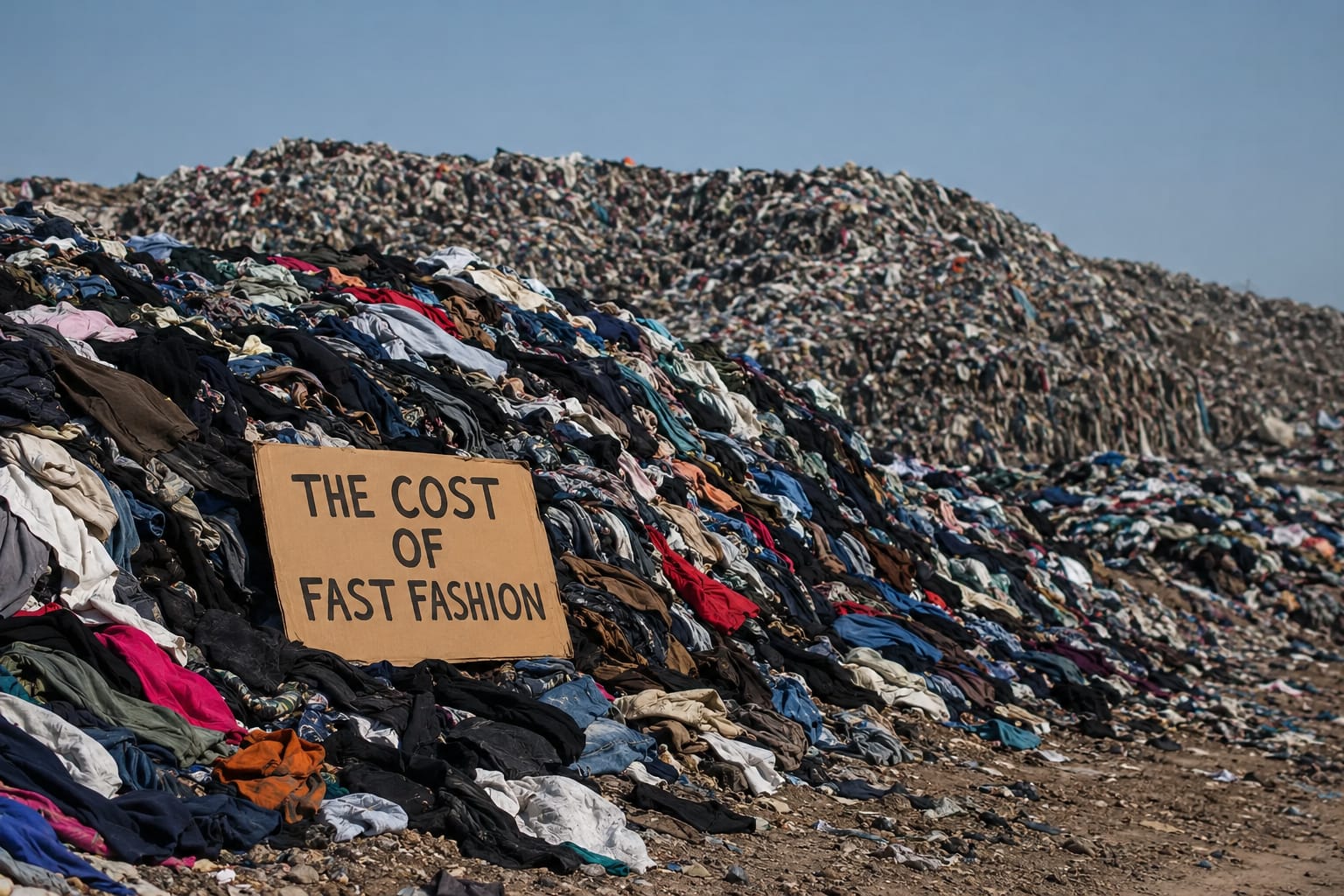
The rise of fast fashion has dramatically increased clothing consumption and disposal. Global fiber production nearly doubled between 2000 and 2022, while consumers now keep garments for shorter periods. This creates enormous amounts of textile waste. Many donated clothes from wealthier nations are exported to developing countries, where large quantities cannot be resold. In Ghana’s Kantamanto Market, millions of garments arrive every week, with a significant portion ending up as waste. Similar problems exist in Chile’s Atacama Desert, where thousands of tonnes of discarded clothing are dumped annually. These examples demonstrate how overproduction fuels a growing global waste crisis.
7. Environmental Damage and Human Costs
The environmental consequences of fashion are closely linked to labor conditions. Cost-cutting measures often affect both worker welfare and environmental standards. The 2013 Rana Plaza factory collapse in Bangladesh, which killed more than 1,100 workers, exposed the risks associated with producing inexpensive clothing at high speed. Unsafe workplaces, low wages, and environmental shortcuts frequently stem from the same pressure to reduce costs. As a result, sustainability discussions must consider both ecological protection and human rights. Addressing one issue without the other fails to tackle the root causes of the industry’s problems.
8. Can the Industry Become More Sustainable?
Governments and organizations are beginning to push for greater accountability. Measures such as extended producer responsibility fees aim to make brands responsible for the waste their products generate. However, many critics argue that current policies remain too limited to address the industry’s scale. While recycled materials and eco-friendly innovations can help reduce impacts, meaningful change requires reducing overproduction and encouraging longer garment use. Unless consumption patterns shift, efficiency improvements alone are unlikely to offset the environmental