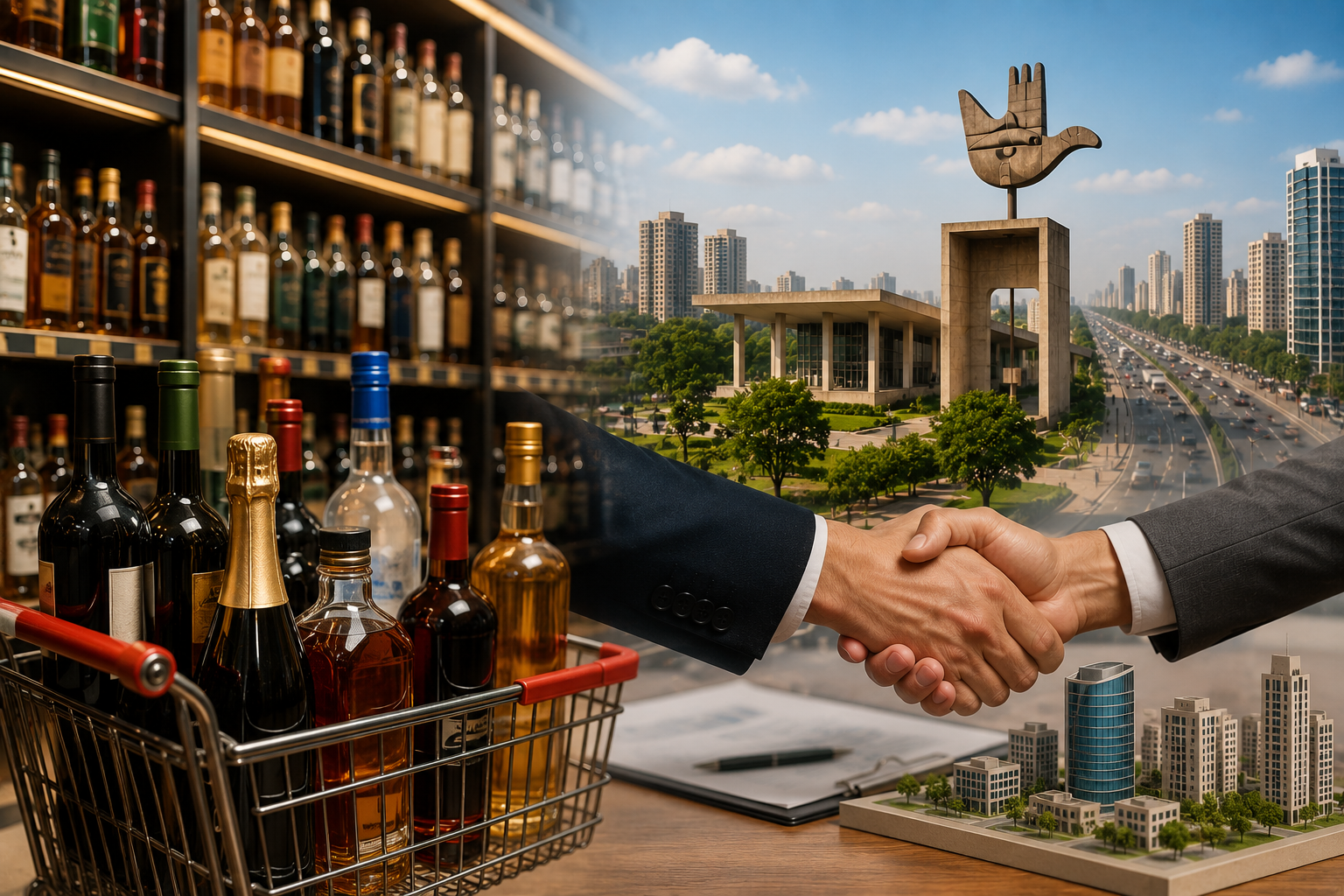
Liquor traders in the National Capital Region (NCR), particularly in Gurugram and Faridabad, are urging the Haryana government to introduce Chandigarh-style excise reforms by allowing the issuance of L-10B licences. The demand comes after Chandigarh recently reintroduced the L-10B licence, which permits organized departmental stores to sell imported foreign liquor, wine, beer, and ready-to-drink alcoholic beverages in a regulated retail environment.
According to industry representatives, the move could modernize liquor retailing in Haryana’s major urban centers, provide greater convenience to consumers, and reduce dependence on traditional liquor vends. Traders argue that organized retail stores, shopping malls, and large supermarkets in Gurugram and Faridabad are well-equipped to handle regulated liquor sales, similar to the system now operational in Chandigarh.
The Chandigarh model was introduced with the objective of creating a more organized and consumer-friendly liquor retail experience, especially for women, senior citizens, and professionals who may prefer purchasing beverages from departmental stores rather than standalone liquor shops. The policy has also been viewed as a way to increase government revenue while ensuring stricter compliance and monitoring.
Industry stakeholders believe that extending the L-10B licence framework to Gurugram and Faridabad could boost excise collections, attract organized retailers, and enhance customer convenience in Haryana’s fastest-growing urban markets. However, the Haryana government has not yet announced any decision on the proposal. The state’s current excise policy focuses on stricter regulations, higher duties, and improved enforcement measures.
If approved, the reform could significantly reshape the liquor retail landscape in NCR Haryana and align it more closely with modern retail practices already being adopted in Chandigarh.