


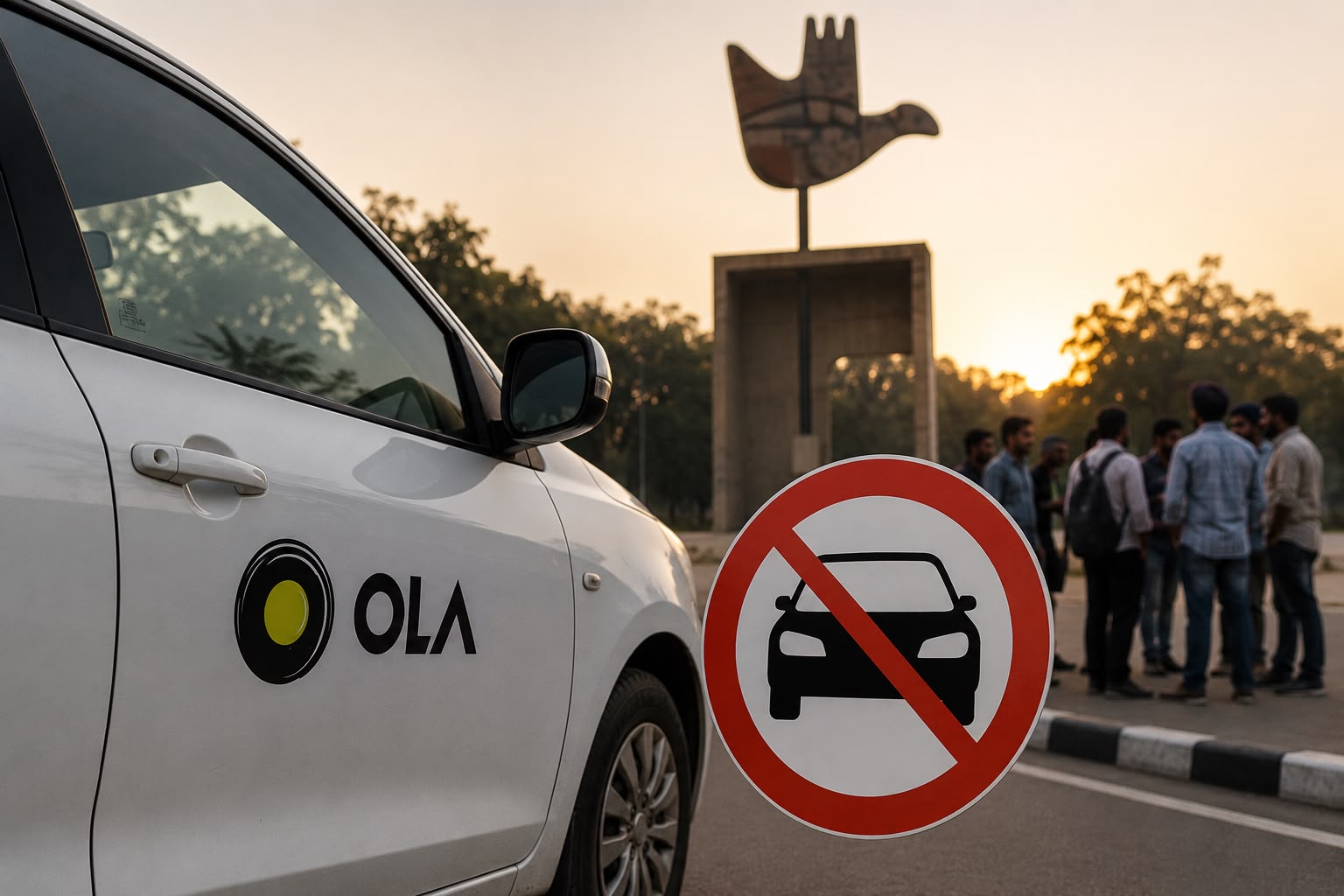
App-based ride-hailing service Ola Cabs has been forced off Chandigarh’s roads after the Chandigarh Administration suspended the company’s aggregator licence for six months. The decision comes amid ongoing unrest among drivers and concerns related to the company’s operations in the Union Territory.
According to officials, the suspension order was issued following a review of the company’s compliance with regulatory requirements governing app-based taxi aggregators. Authorities stated that aggregator licences can be suspended or revoked if operators fail to adhere to prescribed norms relating to service standards, driver welfare, passenger safety, and regulatory obligations. The administration has maintained that the action was taken in accordance with applicable transport regulations.
The development follows months of grievances raised by drivers and transport stakeholders. Driver unions have alleged issues related to fare structures, commission deductions, incentive policies, and declining earnings. Some drivers have also voiced concerns regarding working conditions and the sustainability of operating through app-based platforms. These claims have been made by stakeholders and have not necessarily been established through official findings.
Officials from the Chandigarh Transport Department stated that regulatory compliance remains essential for all aggregators operating in the city. However, authorities have not disclosed all details underlying the suspension order. Legal experts note that companies affected by such actions generally have the option to seek administrative review or legal remedies through appropriate forums.
The suspension is expected to affect both passengers and driver-partners who rely on the platform for daily transportation and income. Commuters may face reduced ride availability, particularly during peak hours, while drivers associated with the platform may be required to explore alternative ride-hailing services or transportation opportunities.
Ola had not publicly disclosed the full details of its response at the time of reporting. Industry observers expect the company to evaluate legal options, engage with regulators, and address compliance-related concerns in an effort to restore operations. Any appeal or request for reinstatement would be subject to the procedures laid down by the authorities.
The decision has triggered mixed reactions from residents, consumer groups, and transport experts. While some welcomed stricter enforcement of regulations, others expressed concern about reduced competition in the ride-hailing sector and its impact on commuter convenience.
The case highlights the growing regulatory scrutiny of digital transportation platforms in India. Over the past decade, app-based aggregators have transformed urban mobility by offering technology-driven transportation services. However, they have also faced recurring disputes involving licensing, driver compensation, pricing policies, and compliance requirements.
Transport analysts say the Chandigarh action could have wider implications for the ride-hailing industry, underscoring the importance of regulatory compliance, transparent operations, and balanced policies that protect both passengers and drivers. As the situation develops, stakeholders across the sector will be closely watching the outcome and its impact on urban mobility and digital transportation services.