


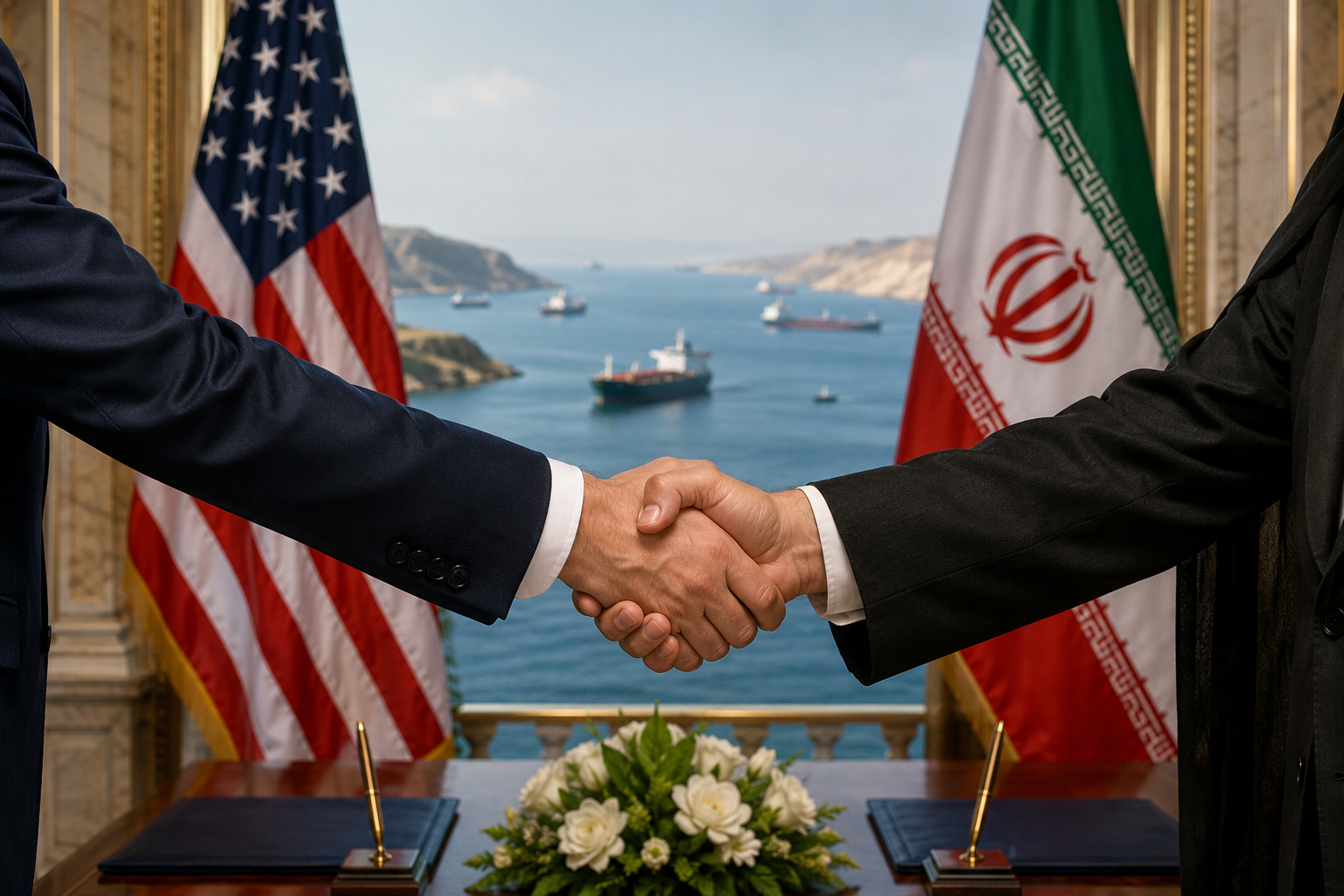
The United States and Iran have announced a preliminary peace agreement that both sides describe as a major step toward ending months of heightened tensions and military confrontation in the Middle East. U.S. President Donald Trump stated that the deal represents a “permanent” end to military action between the two countries, expressing confidence that diplomacy has replaced the threat of further conflict.
According to officials familiar with the negotiations, the agreement includes the reopening of the strategically important Strait of Hormuz, a vital maritime route through which a significant portion of the world’s oil supplies pass. The United States has also agreed to lift its naval blockade on Iran as part of confidence-building measures designed to reduce tensions and restore regional stability.
The breakthrough follows intensive diplomatic efforts involving several international mediators, including European and regional partners who worked to facilitate dialogue between Washington and Tehran. A formal signing ceremony is expected to take place in Switzerland, a country that has frequently served as a neutral venue for sensitive diplomatic negotiations.
Global leaders have largely welcomed the announcement, describing it as a positive development for international security and economic stability. Financial markets reacted cautiously but positively, with analysts noting that reduced risks to shipping through the Strait of Hormuz could ease pressure on global energy supplies and help stabilize oil prices. The agreement may also improve trade flows and lower concerns about disruptions to critical maritime routes.
The recent conflict had raised fears of a broader regional confrontation, prompting international calls for restraint. While the preliminary agreement outlines commitments to de-escalation, maritime security, and diplomatic engagement, several key issues remain unresolved. Among the most significant is the future of Iran’s nuclear program, which is expected to be addressed in subsequent negotiations.
Experts have welcomed the progress but cautioned that long-term peace will depend on sustained political commitment, effective verification mechanisms, and continued dialogue. They note that mutual distrust, regional rivalries, and disagreements over security arrangements could present challenges to the successful implementation of the agreement in the months ahead.