

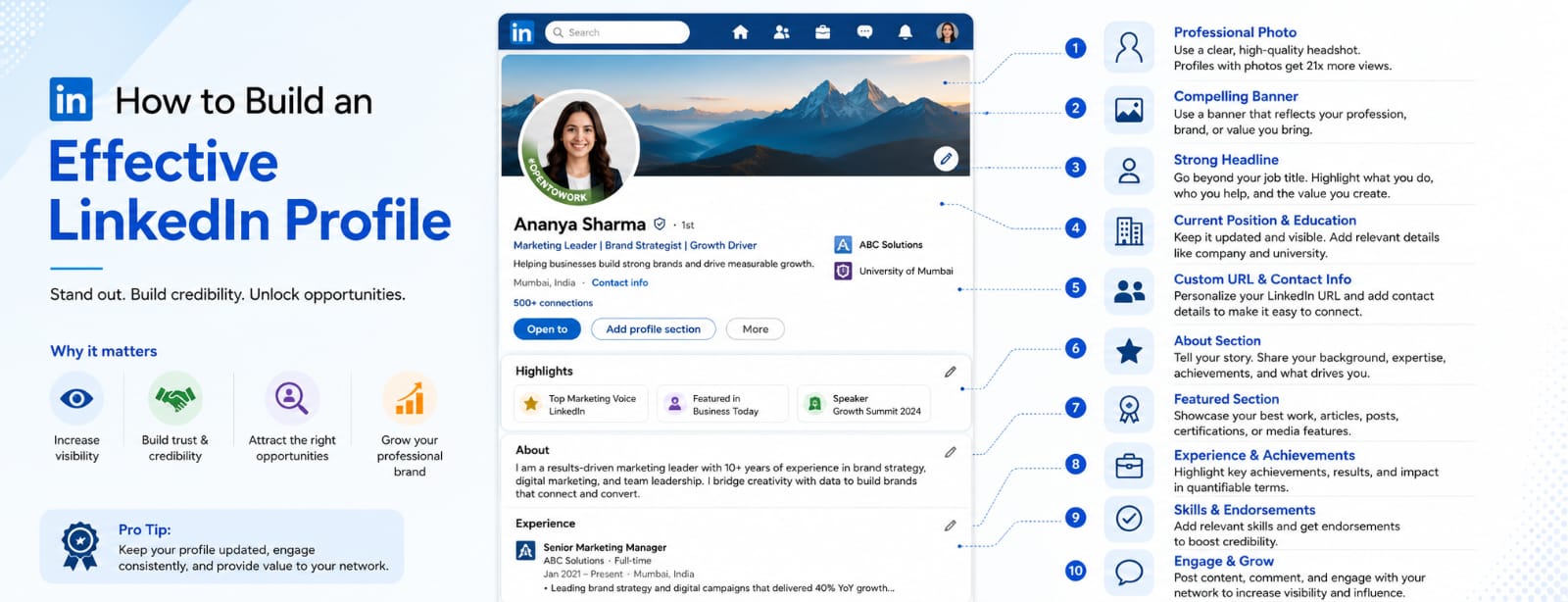
How to Build an Effective LinkedIn Profile
A strong LinkedIn profile works like a 24/7 introduction — it should tell people who you are, what you do, and why it matters before you ever speak to them. Here’s how to build one that actually gets results.
1. Start With a Professional Photo
Profiles with a photo get far more views and connection requests than those without. Choose a clear, recent headshot where you’re dressed appropriately for your industry, facing the camera, and smiling naturally. Avoid group photos, heavy filters, or low-resolution images. Your face should take up roughly 60% of the frame.
2. Use a Banner That Reinforces Your Brand
The background banner is often overlooked, but it’s prime visual real estate. Use it to showcase your company logo, a relevant industry image, your personal tagline, or even contact information. A custom banner instantly signals that you take your professional presence seriously.
3. Write a Headline That Goes Beyond Your Job Title
Your headline appears next to your name everywhere on LinkedIn — in search results, comments, and connection requests — so it shouldn’t just repeat your job title. Instead, communicate the value you provide. For example, instead of “Marketing Manager,” try “Marketing Manager Helping B2B SaaS Companies Triple Their Lead Generation.” Include keywords relevant to your field, since headlines are heavily weighted in LinkedIn’s search algorithm.
4. Craft an “About” Section That Tells a Story
The About section is your chance to speak directly to visitors. Avoid simply listing job duties — instead, tell a compelling narrative:
Open with a hook — a problem you solve or a passion that drives you
Highlight your expertise — key skills, achievements, and unique value
Include measurable results — numbers and outcomes are persuasive
End with a call to action — invite people to connect, visit your website, or reach out
Write in first person and keep paragraphs short. The first two to three lines are the most important, since that’s what shows before someone clicks “see more.”
5. Detail Your Experience With Achievements, Not Just Duties
For each role, don’t just describe what the job entailed — describe what you accomplished. Use bullet points starting with strong action verbs (“Led,” “Launched,” “Increased”) and quantify results wherever possible (“Increased sales by 35% in six months” beats “Responsible for sales”). This approach demonstrates impact rather than just presence.
6. Optimize Your Skills Section
List the skills most relevant to your target roles or industry, prioritizing the ones you want to be found for, since LinkedIn allows you to pin top skills to the top. Ask trusted colleagues, clients, or supervisors to endorse you — endorsements add credibility and improve your visibility in searches.
7. Collect Meaningful Recommendations
Written recommendations carry more weight than endorsements because they offer specific, personal testimony about your work. Reach out to former managers, clients, or teammates and ask them to speak to a specific project or skill rather than writing something generic. A handful of strong, detailed recommendations does more for credibility than dozens of vague ones.
8. Showcase Your Work
Use the “Featured” section to add tangible proof of your expertise — links to articles, presentations, portfolio pieces, case studies, or media mentions. This visual section breaks up text and gives visitors something concrete to engage with, increasing the time they spend on your profile.
9. Customize Your URL
Edit your public profile URL to a clean version of your name (e.g., linkedin.com/in/janedoe) instead of the default string of numbers. This makes your profile easier to share on resumes, email signatures, and business cards, and looks more polished.
10. Stay Active and Visible
A complete profile only gets you so far — consistent activity is what keeps you visible. Post original content, share industry insights, comment thoughtfully on others’ posts, and engage with your network regularly. LinkedIn’s algorithm rewards activity, so an engaged profile appears more often in feeds and searches than a static one.
11. Build a Relevant Network
Quality matters more than quantity. Connect with colleagues, industry peers, clients, and people in your target field rather than accepting every request indiscriminately. When sending connection requests, include a brief personalized note explaining why you’d like to connect — this dramatically increases acceptance rates and starts the relationship on the right foot.
12. Keep Your Profile Updated
Treat your LinkedIn profile as a living document. Update it whenever you take on new responsibilities, complete certifications, finish significant projects, or change roles. An outdated profile can undercut an otherwise strong personal brand.
Final Thoughts
An effective LinkedIn profile isn’t about checking boxes — it’s about presenting a clear, consistent, and compelling professional story. When your photo, headline, About section, and experience all work together to highlight your value, you make it easy for recruiters, clients, and collaborators to understand exactly who you are and why they should connect with you. Invest the time to get these fundamentals right, and your profile becomes a genuine asset in building your career.