


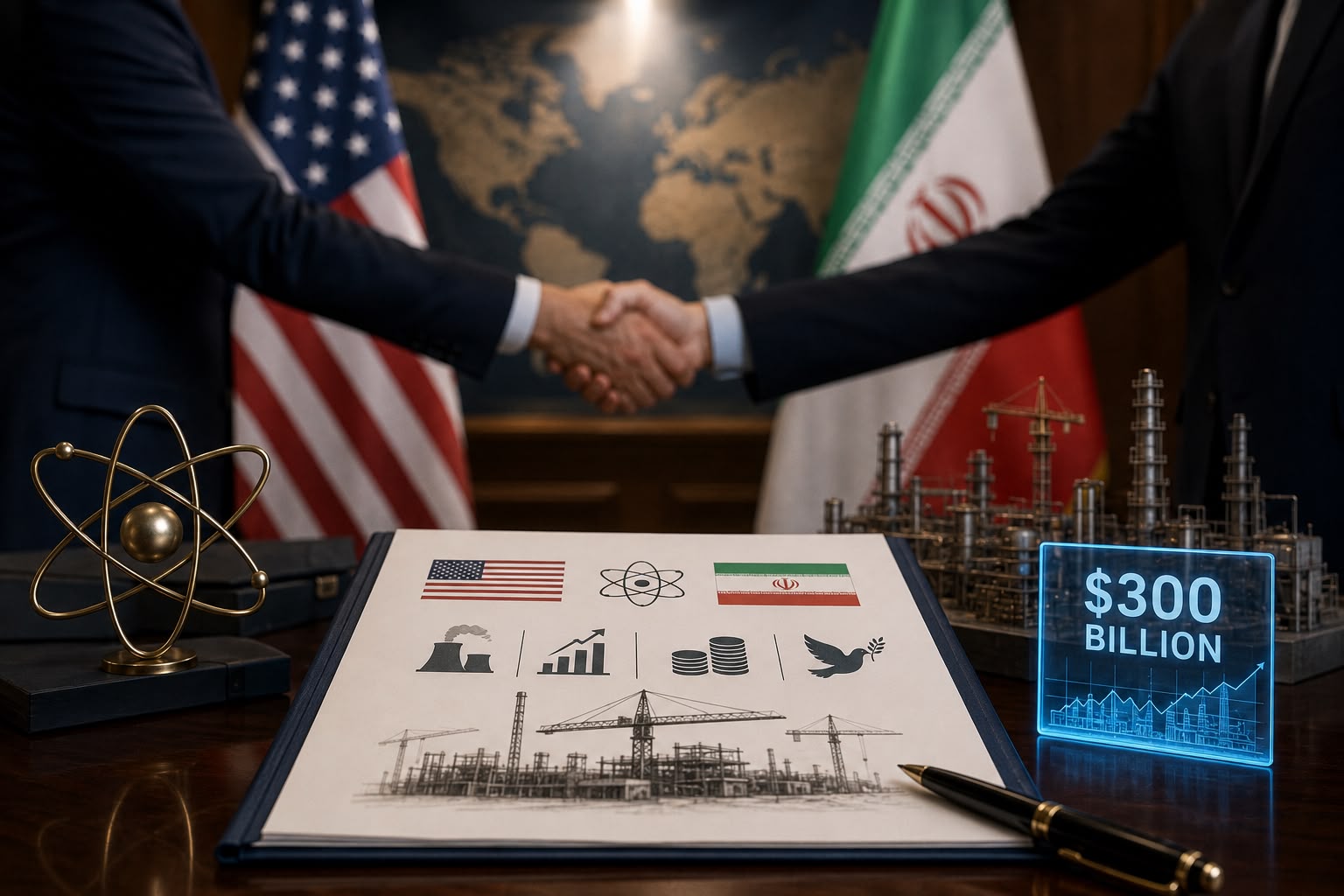
Details from a leaked draft of a recently signed US-Iran memorandum of understanding (MoU) have emerged, offering new insight into commitments related to Iran’s nuclear programme, sanctions relief, regional security, and a proposed multi-billion-dollar reconstruction framework. The draft, which has drawn international attention, outlines a broad roadmap aimed at reducing tensions and stabilising the Middle East after years of geopolitical uncertainty.
According to the leaked text, Iran has reaffirmed its commitment not to develop or acquire a nuclear weapon and has agreed to cooperate with international oversight mechanisms while engaging in future negotiations concerning its nuclear activities. The commitment echoes provisions contained in the 2015 nuclear agreement reached during the administration of former US President Barack Obama. However, that deal later unraveled after the United States withdrew from it during President Donald Trump’s first term.
The draft also outlines a phased sanctions relief programme intended to ease economic pressure on Iran. Among the most closely watched provisions is a proposed reconstruction and development financing framework reportedly valued at up to $300 billion. The funding would be implemented in stages and remain subject to future negotiations, verification measures, and agreed implementation mechanisms. Officials and analysts have noted that interpretations of the financing provisions vary, with questions remaining about the sources and structure of the proposed investment.
A major component of the memorandum focuses on regional security and conflict de-escalation. The draft reportedly calls for an immediate cessation of military operations across multiple fronts, including Lebanon, and establishes a 60-day period for negotiations aimed at achieving a broader political settlement. Both sides have agreed to continue diplomatic engagement under a monitoring and implementation framework designed to oversee compliance with the agreement.
The document also contains provisions related to maritime security. Notably, it proposes the full reopening of the Strait of Hormuz within 30 days, accompanied by guarantees for commercial shipping. The strategic waterway handles a significant portion of global oil and liquefied natural gas exports, making its stability critical to international energy markets and global trade.
Reactions to the leaked agreement have been mixed. Supporters describe it as a potentially significant diplomatic breakthrough that could reduce regional tensions and improve economic stability. Critics, however, have raised concerns about enforcement mechanisms, verification procedures, and whether all parties will fully comply with the commitments outlined in the draft.
The agreement comes after years of strained US-Iran relations marked by sanctions, military tensions, and disputes over Iran’s nuclear ambitions. Analysts say the memorandum represents an interim framework rather than a final settlement and will require sustained diplomatic effort to succeed.
As discussions continue, attention will remain focused on implementation, verification, and the willingness of both sides to honour their commitments. The ultimate impact of the agreement will depend on whether it can translate diplomatic promises into lasting stability and cooperation.